Let’s pull back the curtain on one of the unsung heroes of AI image generation. It’s the quiet powerhouse, the secret ingredient, the behind-the-scenes wizard that makes your AI art crisp, vibrant, and downright magical. I’m talking about VAEs—Variational Autoencoders.
Now, if the term “VAE” sounds intimidating, don’t worry. By the end of this, you’ll not only know what a VAE is but also why it’s so vital to the world of generative AI, especially when it comes to image generation.
So, What Is a VAE?
A Variational Autoencoder (VAE) is a type of neural network that compresses data into a simpler representation and then reconstructs it back into its original form. Think of it as a really clever translator: it takes an image, reduces it to its essence, and then recreates it—often better than it was before.
In AI terms, this compression is called encoding, and the recreation is called decoding. VAEs are particularly good at this because they don’t just memorize data—they learn patterns and structures, making them incredibly efficient and flexible.
Why Do VAEs Matter in Image Generation?
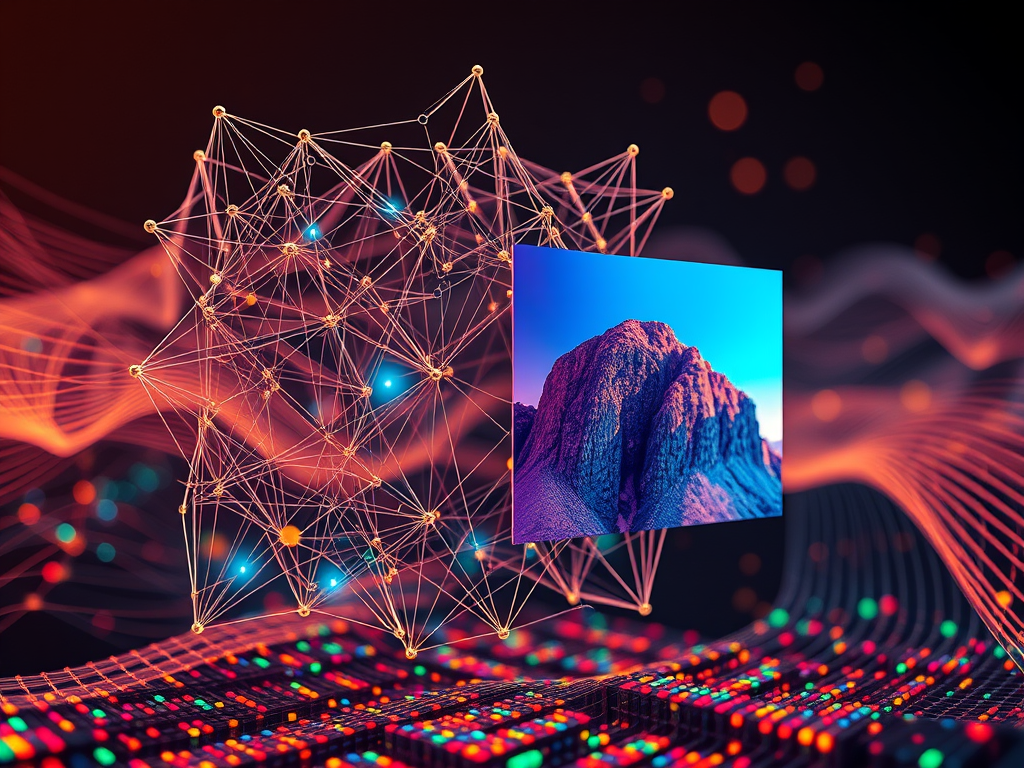
When you’re working with models like Stable Diffusion or HunyuanVideo, you’re not generating images pixel by pixel. Instead, these models operate in something called latent space, a compressed representation of the image. And this is where VAEs shine.
Here’s what VAEs do for you:
1. Compression: They take an image and shrink it into a compact representation, capturing only the most important information. This reduces the computational burden and speeds up the generation process.
2. Reconstruction: Once the AI model has done its magic in latent space, the VAE decodes the compressed representation back into a high-resolution image.
3. Image Quality: A good VAE ensures that the final image is sharp, detailed, and free of unwanted artifacts.
Without VAEs, the AI would struggle to bridge the gap between the fuzzy latent space and the crisp, high-quality visuals you expect.
Breaking It Down: How VAEs Work
Let’s simplify things with an analogy. Imagine you’re trying to explain the Mona Lisa to someone over the phone. You wouldn’t describe every brushstroke; you’d focus on the essentials—“It’s a portrait of a woman with a mysterious smile, in soft lighting.” That’s what a VAE does:
- Encoder: Reduces the image into a simpler “summary” (latent code).
- Latent Space: The abstract, compressed version of the image where AI models work their magic.
- Decoder: Reconstructs the detailed image from that summary.
Why VAEs Are Essential for AI Art
In the world of generative AI, VAEs serve as a translator between two very different worlds:
- The AI’s World: A mathematical, high-dimensional latent space.
- Our World: Full of rich, detailed, and visually pleasing images.
By bridging this gap, VAEs make it possible for AI to generate realistic and artistic images that align with our expectations.
How VAEs Are Used in Popular AI Models
Here’s how VAEs play a role in some of your favorite tools:
Stable Diffusion
- VAEs handle the final decoding step, taking the latent output from the diffusion process and converting it into a high-resolution image.
- Models like SDXL rely on advanced VAEs to ensure detailed and vibrant outputs.
• HunyuanVideo:
• Uses a 3D VAE for compressing video data across time and space, enabling efficient video generation without losing quality.
• LTX Video:
• Employs VAEs to reduce complexity, ensuring lightning-fast video generation.
Choosing the Right VAE for Your Workflow
If you’re working with a platform like ComfyUI or AUTOMATIC1111, you might notice options for VAEs. Here’s what to consider:
1. Default vs. Custom VAEs: Many models come with built-in VAEs, but custom VAEs can improve quality for specific tasks.
2. Performance: Some VAEs prioritize speed, while others focus on preserving detail. Choose based on your project’s needs.
3. Installation: To add a custom VAE, download the file (usually .safetensors or .vae) and place it in the appropriate folder, like models/vae.
Common Questions About VAEs
• Do I always need a VAE?
• If you’re generating high-resolution images or videos, absolutely. A VAE ensures that the output is polished and professional.
• Can I use a model without a VAE?
• Technically yes, but the results may look unfinished or lack detail.
• What’s the best VAE for Stable Diffusion?
• The Autoencoder KL (Kingma & Welling) is a popular choice, but your needs may vary based on the task.
Final Thoughts: Why VAEs Deserve the Spotlight
VAEs might not be the flashiest part of generative AI, but they’re undeniably one of the most important. They’re the workhorse behind the curtain, quietly ensuring that your AI creations look their best.
So, the next time you marvel at a stunning AI-generated image or video, spare a thought for the humble VAE. It’s not just translating your ideas into pixels—it’s turning them into art. Happy creating!