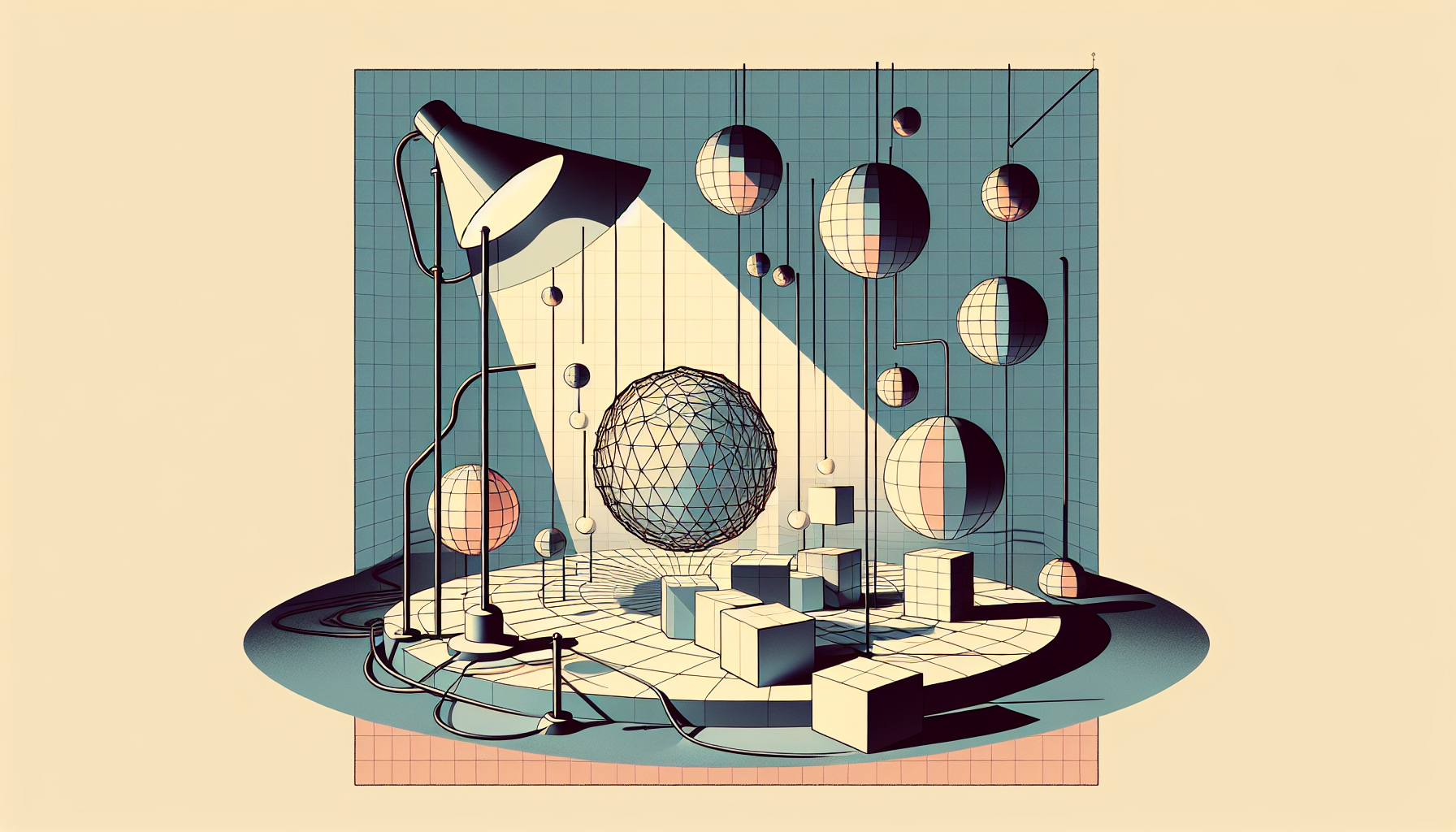
In the rich tapestry of game development, the artistry isn’t just in the colors or textures; it’s also in how objects cast their shadows and interact with light. Mesh Distance Fields in Unreal Engine are a bit like the unsung heroes of this artistry, offering a sophisticated way to manage shadows and ambient occlusion with a finesse that can elevate the visual realism of your scenes. Let’s dive into the world of Mesh Distance Fields and uncover how they refine the interplay of light and geometry in your games.
What are Mesh Distance Fields?
Mesh Distance Fields are essentially a spatial representation, storing the minimum distance between any point in 3D space and the surface of a mesh. Think of it as an invisible aura around each object, detailing how far other objects are from touching it. This might sound like an abstract concept, but it’s a powerful tool for calculating how light and shadows behave around complex geometries, enabling realistic soft shadows, ambient occlusion, and other subtle lighting phenomena.
Features That Make Mesh Distance Fields Indispensable
1. Enhanced Shadow Quality: Mesh Distance Fields provide dynamic soft shadows with variable penumbra, mimicking the natural behavior of shadows in the real world. The result? Soft, lifelike shadows that enhance the depth and realism of your scenes.
2. Ambient Occlusion: They excel at ambient occlusion—shading crevices, corners, and other nooks where light has a harder time reaching. This not only adds depth to the visuals but also boosts the overall atmosphere of the environment.
3. Efficient Large Scale Occlusion: Unlike traditional methods that struggle with large scale occlusion, Mesh Distance Fields efficiently handle occlusion over vast distances, making them ideal for large, open-world environments.
4. Real-Time Interactions: Because they update in real-time, Mesh Distance Fields are perfect for dynamic scenes where objects are constantly moving. This real-time calculation ensures that the lighting and shadows are always accurate, regardless of how the scene changes.
Implementing Mesh Distance Fields in Your Project
Step 1: Enable Mesh Distance Fields
- First, ensure that Mesh Distance Fields are enabled in your project settings. Go to the Rendering section, find Mesh Distance Fields, and activate them. This is crucial as it adjusts the engine to start processing and using distance fields for rendering.
Step 2: Adjust Mesh Settings
- Each mesh in your scene can contribute to the distance field. Adjust settings such as resolution to balance between performance and quality. Higher resolution distance fields capture finer details but at a greater computational cost.
Step 3: Configure Lighting
- With Mesh Distance Fields active, you can set up your lights to use them for both shadows and ambient occlusion. Adjust light properties like shadow softness and occlusion intensity to get the desired effects.
Step 4: Optimize and Test
- Testing and optimization are key. Check how the distance fields affect performance and visuals across different devices and platforms. Optimize settings to ensure a good balance between visual fidelity and frame rate.
The Visual Magic Behind Mesh Distance Fields
Using Mesh Distance Fields is akin to having a finely tuned orchestra at your fingertips, where every instrument is a pixel that plays its part in harmony with the others. The result is a symphony of shadows that can make your scenes pulsate with life. From enhancing the creepiness of a dark alley by accentuating its hidden depths to rendering the gentle play of sunlight through a canopy, Mesh Distance Fields adjust, adapt, and awe.
Conclusion: A Step Into the Light
Mesh Distance Fields are not just a feature in Unreal Engine; they’re a paradigm shift in how we think about and render lighting and shadows. By embracing this technology, developers and artists can push the boundaries of what’s possible in digital environments, crafting scenes that are not only visually stunning but are also rich with depth and realism.
Whether you’re building a haunted forest, a bustling cityscape, or alien landscapes, Mesh Distance Fields provide the tools to ensure that every light and shadow tells a story.