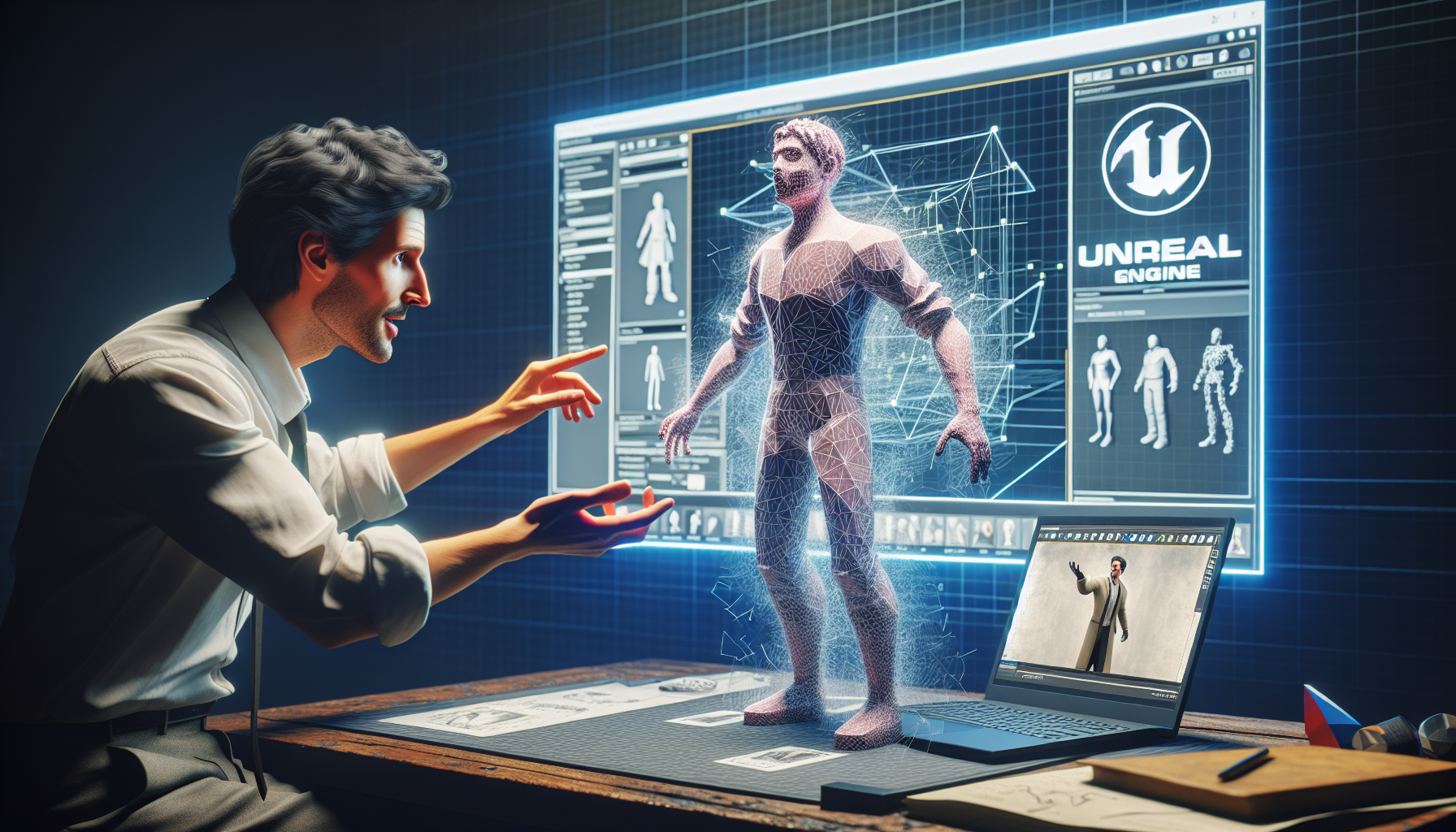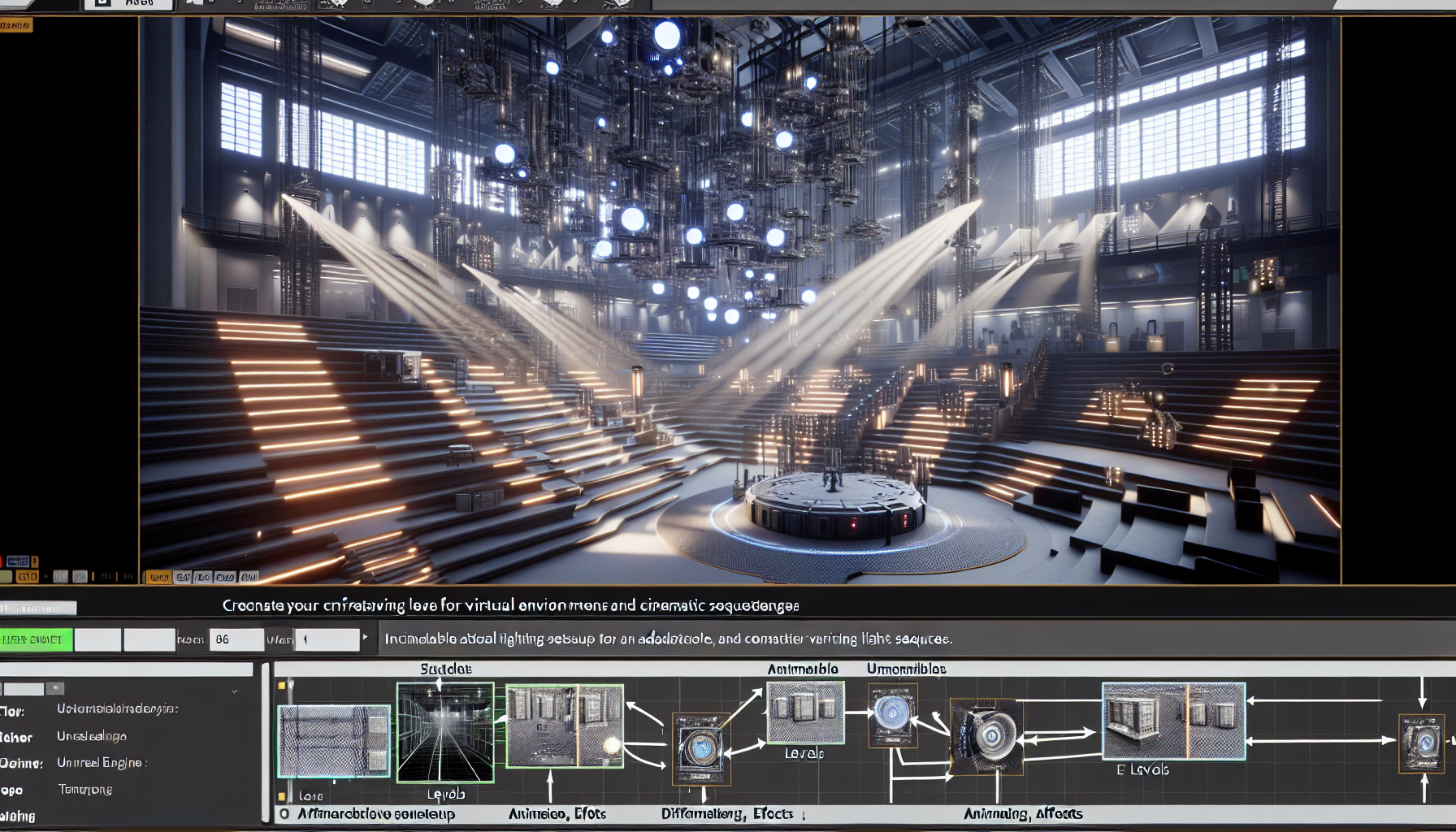
When we think of Unreal Engine, video games often come to mind as the primary canvas for its technological prowess. However, this powerhouse tool has significantly expanded its horizon into realms like video and film production, particularly through its robust handling of levels. For motion graphic designers and filmmakers, understanding how to leverage levels in Unreal Engine can transform their approach to creating dynamic visuals and cinematic sequences.
Let’s explore how levels can be applied creatively in the context of motion graphic design for video and film, and not just for gaming.
The Power of Levels in Visual Storytelling
In Unreal Engine, levels are essentially distinct environments or scenes, but their use extends far beyond creating interactive game spaces. In video and film production, levels can serve as virtual sets or animated sequences, each containing its unique set of elements and atmospheres.
1. Creating Virtual Production Sets
Unreal Engine has been a game-changer in the virtual production space. By using levels, filmmakers can construct detailed virtual sets that are both cost-effective and highly controllable.
- Dynamic Environments: Levels allow for the creation of detailed environments that can change dynamically. This is particularly useful for scenes requiring multiple lighting setups or background changes that would be costly or impractical to achieve on a physical set.
- Real-Time Visualization: Directors and cinematographers can visualize complex scenes in real-time, adjusting elements on the fly without the need for post-production edits. This immediate feedback accelerates the creative process and enhances collaboration on set.
2. Crafting Animated Sequences
For motion graphic designers, levels can be thought of as individual scenes or sequences in an animation or video. Each level can be tailored with specific animations, effects, and timing, all controlled within Unreal Engine.
- Segmented Storytelling: By dividing an animated sequence into multiple levels, designers can focus on refining each segment independently, ensuring high-quality output and better resource management.
- Interactivity and Motion: Levels can be designed to interact with each other, allowing for complex transitions and interactive elements within a video that can respond to viewer inputs or change over time.
3. Utilizing Sublevels for Enhanced Complexity
In more complex productions, sublevels within a main level can be used to manage different components of a scene, such as lighting, background elements, and active animations.
- Modular Design: Using sublevels, a designer can modularly adjust components without disrupting the overall structure. For example, lighting effects or seasonal changes can be swapped out simply by switching sublevels without altering the core animations or models.
- Efficient Iterations: Sublevels make it easier to test different versions of a scene. A director might want to see multiple lighting setups or background variations, which can be quickly toggled in and out for review.
4. Level Streaming for Seamless Transitions
Level streaming, a feature where levels load dynamically, can be especially advantageous in creating long-form animations or sequences that need to flow seamlessly from one scene to another.
- Continuous Narrative Flow: Stream levels to maintain a narrative flow without loading screens or breaks, ideal for immersive storytelling or continuous background presentations.
- Resource Management: Streaming only the necessary levels at required times helps manage system resources efficiently, maintaining smooth playback and high-quality visuals even in resource-intensive scenarios.
Conclusion: A New Dimension for Designers
Unreal Engine’s approach to levels is not just a game development feature; it’s a potent tool in the arsenal of filmmakers and motion graphic designers. It offers a new dimension of creativity and efficiency, breaking down the traditional barriers between video production and interactive media. Whether creating a fully animated short, a feature-length film, or interactive video content, the strategic use of levels in Unreal Engine can elevate your creative project from the ordinary to the extraordinary.
So, step beyond the game, and reimagine what your narratives can achieve with the power of Unreal Engine levels.